

Natural Stone
How to Choose the Right Masonry Brick for a Toronto Home Exterior
Selecting masonry brick for a home exterior is not a purely cosmetic decision. The brick you install has to withstand Ontario’s freeze-thaw cycles, complement the neighbourhood’s architectural style, meet local building code requirements, and retain its colour for decades without intervention. For homeowners planning a new build and custom builders managing client expectations, understanding the variables that separate one brick from another is the fastest path to a material choice that performs as well as it looks.
Why Brick Type Matters More Than Brick Colour
Colour gets the most attention in early design conversations, but the physical properties of the brick determine how it will actually perform on a Toronto home exterior over 30, 50, or 100 years. The three characteristics that matter most in this climate are compressive strength, water absorption rate, and freeze-thaw resistance rating.
Compressive strength measures how much load a brick can bear before failure. For residential exteriors in Ontario, a minimum compressive strength of 20 MPa is standard. Most clay face bricks comfortably exceed that threshold, but cheaper imported bricks sometimes fall short — always confirm the spec sheet before ordering.
Water absorption is the metric that predicts freeze-thaw durability. When moisture enters a brick and then freezes, it expands by roughly 9%, which generates internal pressure that causes spalling (surface flaking) over time. Bricks with absorption rates below 5% resist this process far more effectively. The CSA A82 standard classifies bricks into grades based on weathering resistance: Severe Weathering (SW) grade is the minimum acceptable rating for any exterior application in the GTA.
Clay Brick vs. Concrete Brick — What's the Actual Difference?
Clay brick is made from natural clay fired in kilns at temperatures between 1,000°C and 1,200°C. That firing process vitrifies the clay, creating a dense, colour-fast material that resists UV fading and maintains its appearance for the life of the building. The colour comes from the mineral composition of the clay itself and the kiln atmosphere, not from surface dyes. That is why a 100-year-old clay brick building in the Annex or Cabbagetown still looks rich and saturated — the colour runs through the entire body of the brick.
Concrete brick is made from Portland cement, aggregate, and pigments, then cured rather than fired. It is typically less expensive per unit than clay brick and available in a broader range of colours, including tones that are difficult to achieve with natural clay. The trade-off is that concrete brick can fade over time as surface pigments weather, and its moisture absorption tends to run higher than fired clay. For exterior applications in Toronto, concrete brick performs well when specified to CSA standards — but it requires more careful product selection to match the longevity of quality clay brick.
Manufacturers like Permacon and Rinox produce engineered concrete masonry products designed specifically for Ontario’s climate, with absorption and freeze-thaw ratings that meet or exceed code requirements.
How Toronto's Climate Shapes Brick Selection
The GTA averages roughly 55 freeze-thaw cycles per winter — one of the highest counts in Canada south of the Canadian Shield. That repeated thermal stress makes brick selection here more consequential than in milder climates. A brick that performs well in Vancouver or even Montreal may deteriorate more quickly in Toronto’s specific temperature swing.
Beyond freeze-thaw, Toronto’s urban heat island effect and exposure to road salt spray (particularly on homes near major arterials) add chemical stress that accelerates surface degradation in lower-grade bricks. For homes within 30 metres of a salted road, specifying a SW-rated clay brick with absorption below 5% is not conservative — it is baseline.
Wind-driven rain is the other factor custom builders account for in the GTA. Toronto’s prevailing winds come from the west and northwest, which means the west-facing elevation of a home is most exposed to moisture. Some builders spec a higher-density brick or an additional weather-resistant barrier on that face specifically. Understanding these microclimate conditions is part of choosing the right masonry product for the site, not just the project.
Matching Brick to Architectural Style
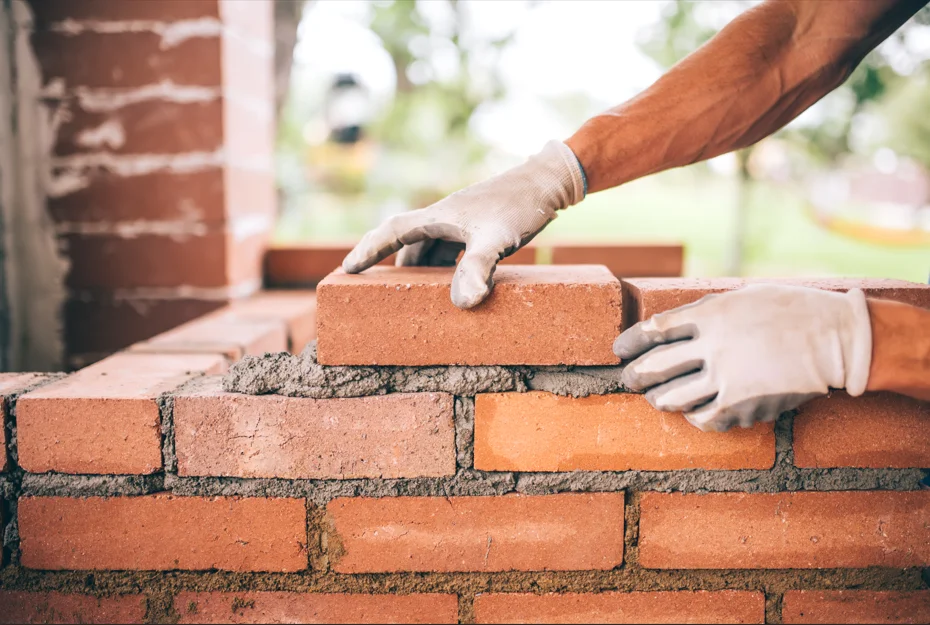
Brick colour, texture, and bond pattern should align with the architectural language of the home and the streetscape it sits within. Toronto’s residential fabric is architecturally diverse, and the wrong brick can make a well-built home look out of place.
For traditional Toronto styles — Georgian, Victorian, Edwardian — red and buff clay bricks in smooth or wire-cut textures are the most historically appropriate. These homes typically use running bond or Flemish bond patterns, and the mortar joint colour (usually grey or buff) plays a significant role in the overall facade read.
For contemporary builds, dark charcoal and matte-black bricks with linear profiles have become popular across new construction in Midtown and the inner suburbs. Large-format bricks and thin brick veneers create a minimalist aesthetic that pairs with steel, glass, and composite cladding. Brands like NG Stone and Polycor offer masonry options that bridge traditional and modern applications.
For renovation and addition projects, colour-matching to existing brickwork is one of the most common challenges. Weathering, soot, and decades of UV exposure shift the perceived colour of original brick, so matching fresh brick to a 70-year-old facade requires in-person comparison under natural light — not a digital catalogue swatch.
Thin Veneer Brick vs. Full-Bed Brick — When to Use Each
Full-bed brick (standard 90 mm depth) is the structural default for new masonry walls and load-bearing applications. It ties into the building’s structural system and provides both the aesthetic face and a portion of the wall assembly’s thermal mass and fire resistance.
Thin veneer brick is a non-structural cladding option, typically 15–30 mm thick, adhered to a substrate rather than laid in a traditional mortar bed. It is significantly lighter than full-bed brick, making it suitable for applications where the structure cannot support the full masonry weight — steel-frame builds, ICF walls, wood-frame renovations, and interior accent walls. Thin veneer is also used to add brick character to soffits, archways, and custom stone details where full-depth masonry is impractical.
The visual result can be nearly identical when a thin veneer is installed by a skilled mason with proper mortar jointing. The structural and insulation properties, however, are not equivalent, and the building code in Ontario distinguishes between the two in wall assembly calculations.
What to Check Before You Order
Before finalizing a brick selection for any GTA project, confirm the following: the brick carries a CSA A82 or equivalent rating for Severe Weathering (SW) grade; the water absorption rate is documented on the manufacturer spec sheet; the colour sample you approved was viewed under natural daylight, not showroom lighting; the mortar type and colour have been specified to complement the brick (Type N mortar for most above-grade residential exteriors); and enough material has been ordered with 5–10% overage to account for cutting waste and future repairs.
Visiting a stocked supplier where you can see and handle full-size samples alongside mortar options, accessories, and materials saves time and prevents costly mismatches. For homeowners and builders working across the GTA, the showroom at Grand Valley Building Supplies in North York carries masonry lines from Permacon, Rinox, NG Stone, Polycor, and more — all viewable in person.
The Bottom Line
Choosing exterior brick for a Toronto home is an engineering decision as much as a design one. Start with climate-rated performance specs, narrow the field by architectural style and budget, then finalize colour and texture by comparing physical samples under natural light. A brick that checks all three boxes — performance, context, and aesthetics — will look right and last decades without remedial work.
Talk to a Masonry Specialist
Grand Valley Building Supplies has supplied masonry products to Toronto’s residential and commercial builders for over 50 years. Their North York location at 4701 Steeles Ave West stocks a full selection of clay and concrete masonry brick, thin veneer systems, mortar, and installation accessories from trusted manufacturers. Whether you are comparing brick options for a custom build or colour-matching for a heritage renovation, their team can walk you through specs, samples, and order quantities on-site. Visit Monday to Friday, 7:00 AM to 4:30 PM, or book a consultation in advance.

Frequently Asked Questions
What is the best type of brick for a Toronto home exterior?
SW-rated (Severe Weathering) clay face brick with a water absorption rate below 5% is the most reliable choice for Toronto’s climate. Clay brick is colour-fast, naturally resistant to UV fading, and rated to withstand the 50+ freeze-thaw cycles the GTA experiences each winter. Concrete masonry units from manufacturers like Permacon and Rinox are also suitable when engineered to meet CSA A82 standards. The “best” brick for a specific project depends on the architectural style, structural requirements, and budget — but climate rating should always be the first filter.
How much does brick cost per square foot in the GTA?
Clay face brick in the Toronto market typically ranges from $6 to $14 per square foot for materials, depending on the manufacturer, colour, and texture. Concrete brick generally ranges from $4 to $10 per square foot. Thin veneer brick costs $8 to $18 per square foot installed, including adhesive and jointing. Labour for traditional full-bed brick installation adds $12 to $22 per square foot, depending on wall complexity, scaffold requirements, and bond pattern. A complete exterior re-brick of a standard two-storey Toronto home (approximately 1,500–2,000 square feet of face area) typically lands between $30,000 and $70,000 fully installed.
What is the difference between face brick and veneer brick?
Face brick is a full-depth masonry unit (typically 90 mm deep) laid in a mortar bed as part of the wall’s structural assembly. Veneer brick is a thinner product (15–30 mm) adhered to an existing substrate with mortar or mechanical fasteners. Face brick contributes structural mass, fire resistance, and thermal inertia. Veneer brick provides the visual appearance of masonry without the weight or structural capacity. Both are used on Toronto home exteriors, but building code treats them differently in wall assembly and fire-rating calculations.
Can I match a new brick to my existing Toronto home?
Yes, but colour-matching requires in-person comparison under natural daylight. Existing brick shifts in perceived colour over decades due to weathering, soot accumulation, and UV exposure, so a fresh brick that looks identical in a catalogue may appear noticeably different on the wall. The most reliable approach is to bring a sample of your existing brick — or a clean, freshly cut piece — to a masonry showroom and compare it directly against current production runs. Some manufacturers also offer custom colour blending for heritage restoration projects.
Do I need a permit to re-brick my house in Toronto?
In most cases, yes. The City of Toronto requires a building permit for any work that alters or replaces the exterior cladding of a home, including full or partial re-bricking. If the home is in a Heritage Conservation District or is individually listed on the Heritage Register, additional approvals from the city’s Heritage Preservation Services may also be required before any changes to the facade. Consulting Toronto’s building permit portal or working with a contractor experienced in local permitting is recommended before ordering materials.