

Natural Stone
Natural Stone vs. Porcelain Pavers: Which Is Right for Your GTA Project?
Choosing between natural stone and porcelain pavers is one of the most consequential decisions homeowners and landscape contractors face when planning a patio, walkway, or outdoor living area in the Greater Toronto Area. Both materials perform well in Ontario’s freeze-thaw climate, but they differ sharply in cost, maintenance requirements, design flexibility, and long-term durability. This guide breaks down those differences with region-specific detail so you can match the right paver to the right project.
What Counts as Natural Stone — and Why Does It Matter?
Natural stone pavers are cut or split from quarried rock. Common types used across the GTA include granite, limestone, sandstone, slate, and flagstone. Because each slab forms over thousands of years under geological pressure, no two pieces look alike. That variation is the primary reason designers and homeowners gravitate toward natural stone for high-visibility installations such as front walkways, pool surrounds, and outdoor kitchens.
Natural stone’s density also makes it exceptionally durable. Granite pavers, for example, score a 6–7 on the Mohs hardness scale and routinely last 50+ years with minimal upkeep. Sandstone and limestone are softer but still perform well when sealed and properly installed on a compacted gravel base. For Toronto-area projects, brands like Banas Stone and STONEArch offer a wide range of colours, finishes, and dimensional cuts suited to both residential patios and commercial hardscaping.
How Porcelain Pavers Differ from Natural Stone
Porcelain pavers are manufactured from refined clay fired at temperatures above 1,200°C. That firing process produces a near-zero porosity rate — typically below 0.5% water absorption — which is why porcelain resists staining, mould growth, and freeze-thaw spalling more consistently than most natural stones. For GTA homeowners dealing with salt, ice, and standing water every winter, that low absorption rate is a practical advantage worth noting.
Modern porcelain pavers also replicate the look of natural materials with remarkable accuracy. Wood-grain finishes, travertine textures, and slate-mimicking surfaces are now standard options. Lines like Banas Porcelain and Porcea Stone deliver that aesthetic consistency while keeping thickness uniform at 20 mm, which simplifies installation on pedestal systems or compacted aggregate.
Cost Comparison — Material, Installation, and Long-Term Value
Material cost is the first line item most project budgets address. In the Toronto market, natural stone pavers generally run between $8 and $25 per square foot depending on stone type and finish. Granite and quartzite sit at the higher end; limestone and sandstone land in the middle. Porcelain pavers typically range from $6 to $18 per square foot, though premium large-format options can exceed that range.
Installation costs even the playing field somewhat. Natural stone is heavier, often irregular in thickness, and may require more cutting and fitting on-site. That adds labour hours. Porcelain’s uniform dimensions reduce cutting waste and speed up layout, but the material is brittle under point loads and requires diamond-blade wet saws, which adds equipment cost.
Over a 20-year horizon, natural stone tends to hold or increase property value because buyers perceive it as a premium material. Porcelain offers lower lifetime maintenance costs — no sealing, no efflorescence, and no colour fade — which makes it the stronger ROI play for rental properties or commercial installations where upkeep budgets are tight.
Freeze-Thaw Performance in Ontario's Climate
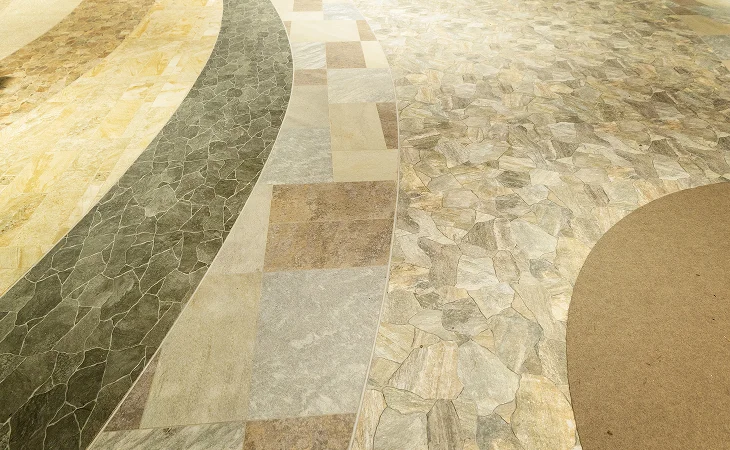
The GTA averages roughly 55 freeze-thaw cycles per winter. That repeated expansion and contraction is the single biggest threat to any outdoor paver surface, and it’s where material selection gets technical.
Porcelain’s sub-0.5% absorption rate means there’s almost no moisture inside the paver to freeze and expand. That translates to virtually zero spalling or surface flaking over time. Natural stone absorption rates vary widely: granite sits around 0.2–0.5%, limestone ranges from 1–12%, and sandstone can reach 5–8%. Stones with absorption above 5% need annual sealing to survive GTA winters without surface degradation.
For contractors working on projects where long-term warranty commitments matter, porcelain’s freeze-thaw consistency is a measurable advantage. For homeowners willing to seal stone every 2–3 years, a quality natural stone paver will perform just as reliably — and develop a weathered patina that many people prefer over time.
Design Flexibility and Aesthetic Differences
Natural stone wins on uniqueness. Every piece carries its own mineral composition, veining pattern, and colour variation. That organic character gives a patio or walkway a look that no manufactured product can replicate. For heritage homes, estate properties, and custom landscape and hardscape designs across the GTA, that authenticity is often non-negotiable.
Porcelain wins on consistency. If a project calls for a perfectly uniform colour field across 800 square feet of patio, porcelain delivers that control. It’s also available in larger formats — 24″×24″ and 24″×48″ are common — which creates clean, modern sight lines with fewer grout joints. Rectified edges allow for tight 3 mm joints that give porcelain installations a sleek, contemporary finish.
Both materials work with a variety of laying patterns (herringbone, running bond, basket weave), and both accept custom stone detailing such as border cuts and inlays. The deciding factor is usually whether the homeowner or designer values organic variation or controlled uniformity.
Maintenance Requirements — What Each Material Actually Needs
Natural stone requires periodic sealing — every 2 to 3 years for most limestone and sandstone, less frequently for granite. Unsealed stone is susceptible to oil staining, algae growth in shaded areas, and efflorescence (white mineral deposits rising to the surface). On the positive side, minor scratches and chips in natural stone tend to blend into the material’s existing texture rather than standing out.
Porcelain is effectively maintenance-free beyond routine cleaning. Its non-porous surface sheds stains, resists algae, and won’t develop efflorescence. The trade-off: chips or cracks in porcelain expose a different-coloured clay body underneath, which is more visually noticeable than damage to a through-body natural stone. Replacement pavers are easy to source if you stay within a production run, but colour-matching across different manufacturing lots isn’t always seamless.
For large-scale projects, keeping a small surplus of either material on hand for future repairs is standard practice. Your supplier should be able to advise on recommended overage — typically 5–10% depending on layout complexity.
Which Material Fits Which Project?
Matching the paver to the application matters more than picking a “better” material. Here’s how the decision breaks down by common GTA project type:
Backyard Patios and Outdoor Living Spaces
Both materials work well here. Natural stone suits organic, free-form designs and pairs naturally with garden beds and water features. Porcelain suits modern, linear outdoor rooms — especially when integrated with outdoor kitchens where grease and food staining is a concern.
Front Walkways and Entryways
Natural stone has a clear edge for curb appeal. The texture, colour depth, and perceived quality of a granite or limestone walkway signals craftsmanship. For contractors pitching premium residential work, natural stone is typically the easier sell for front-of-home applications.
Pool Surrounds and Wet Areas
Porcelain’s low absorption rate and availability in slip-rated finishes make it a strong fit for pool decks. Natural stone also works — particularly flamed-finish granite or textured limestone — but requires sealing and more careful product selection to avoid materials that become dangerously slippery when wet.
Commercial and Multi-Residential
Porcelain’s uniform sizing, lower maintenance overhead, and competitive price point make it the default for commercial courtyards, condo common areas, and municipal streetscape projects. Pedestal installation systems further simplify porcelain use on rooftop terraces and elevated decks.
How to Source the Right Pavers in the GTA
The best way to compare natural stone and porcelain side by side is to see them in person. Colour, texture, and finish look different under natural light than they do on a screen. If you’re sourcing materials for a project in Toronto or anywhere across the GTA, visiting a showroom where you can handle both materials, view full-size samples, and discuss installation details with knowledgeable staff is the most efficient path from decision to delivery.
For contractors managing multiple jobs, working with a supplier that stocks both natural stone and porcelain paver lines — along with the accessories and materials needed for proper installation — reduces lead times and keeps projects on schedule.
The Bottom Line
Neither natural stone nor porcelain is universally “better.” Natural stone delivers unmatched character, proven longevity, and premium curb appeal. Porcelain delivers consistency, low maintenance, and strong performance in wet or high-traffic environments. The right choice depends on the project’s design intent, the client’s maintenance tolerance, and the installation conditions specific to your GTA site.
Ready to Compare Materials in Person?
Grand Valley Building Supplies has been serving contractors and homeowners across the Greater Toronto Area for over 50 years from their North York showroom at 4701 Steeles Ave West. The showroom stocks full-size samples of both natural stone and porcelain paver lines — including Banas, STONEArch, Porcea Stone, and more — so you can compare colour, texture, and thickness under real lighting before committing to a material. Their team can also advise on quantities, finishes, and accessories for your specific project scope. Walk-ins are welcome Monday through Friday, 7:00 AM to 4:30 PM, or you can book a consultation in advance.
Frequently Asked Questions
Are porcelain pavers more durable than natural stone?
It depends on how you define durability. Porcelain pavers have a higher resistance to staining, moisture absorption, and colour fading because of their near-zero porosity (below 0.5% water absorption). Natural stone — particularly granite — is harder and more resistant to surface scratching, with a Mohs hardness rating of 6–7 compared to porcelain’s 5–6. For freeze-thaw durability in Ontario’s climate, porcelain is more consistent out of the box. Natural stone performs equally well when the right stone type is selected and sealed on a regular schedule.
How much do patio pavers cost in Toronto?
Material costs in the Toronto market typically range from $6 to $18 per square foot for porcelain pavers and $8 to $25 per square foot for natural stone, depending on stone type, finish, and slab dimensions. Installation adds $8 to $16 per square foot for either material, with natural stone trending toward the higher end due to variable thickness and additional cutting. A 300-square-foot backyard patio in the GTA generally lands between $4,200 and $12,300 fully installed, depending on material choice and base preparation requirements.
Can porcelain pavers be used around a pool?
Yes. Porcelain pavers are one of the most common choices for pool surrounds in the GTA. Their low water absorption rate prevents the surface damage that freeze-thaw cycling causes in more porous materials, and most manufacturers offer slip-rated (R11 or higher) finishes specifically designed for wet areas. Porcelain also resists chlorine and salt-water staining, which reduces maintenance around pool edges. Natural stone options like flamed-finish granite and textured limestone also work well for pool decks when properly sealed.
Do natural stone pavers increase home value?
Natural stone is widely regarded as a premium exterior material by appraisers and real estate professionals. A well-installed natural stone patio or walkway signals quality craftsmanship and tends to age gracefully, which contributes positively to curb appeal and perceived property value. Industry estimates suggest that well-executed outdoor hardscaping can return 50–75% of project cost at resale. Porcelain pavers also add value, though they are more commonly associated with modern or commercial aesthetics than with the traditional character buyers tend to pay a premium for in residential markets.
What is the best paver for a Toronto driveway?
Driveways require pavers rated for vehicular loads, which narrows the field. Natural stone options like granite setts (cobblestones) and thick-cut limestone (minimum 50 mm) handle vehicle weight well and are common across older Toronto neighbourhoods. For porcelain, only 20 mm pavers installed on a properly compacted aggregate base — not pedestal systems — are rated for light vehicular traffic. Interlocking concrete pavers from landscape and hardscape lines like Rinox, Techo-Bloc, and Unilock are also worth considering for driveways where load tolerance and interlocking structural support are priorities.